
"Hey, What've You Got Back There Behind the Cabinet?"
by Alina Khalitova 1. 4. 2026
Curatorial essay
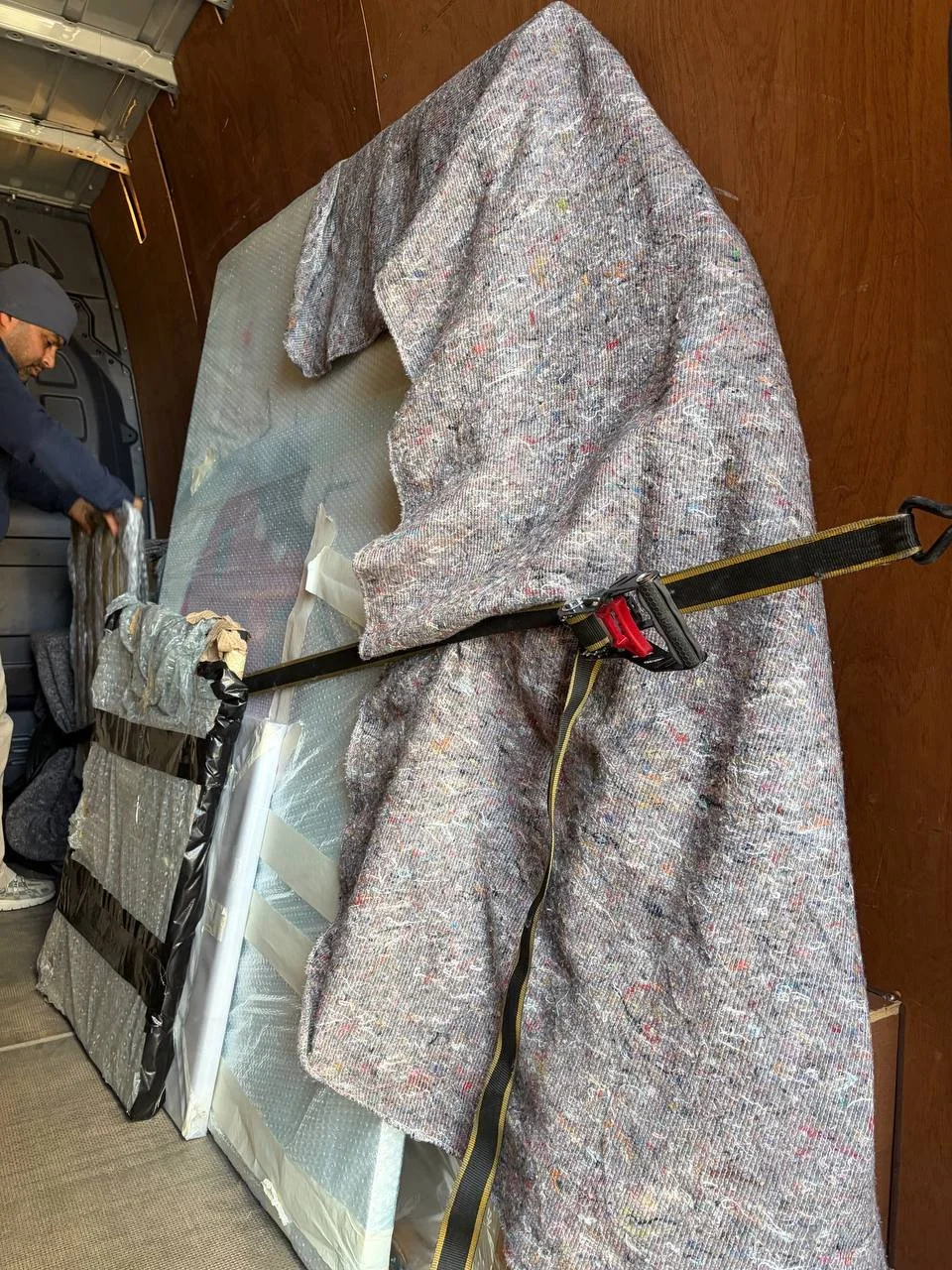
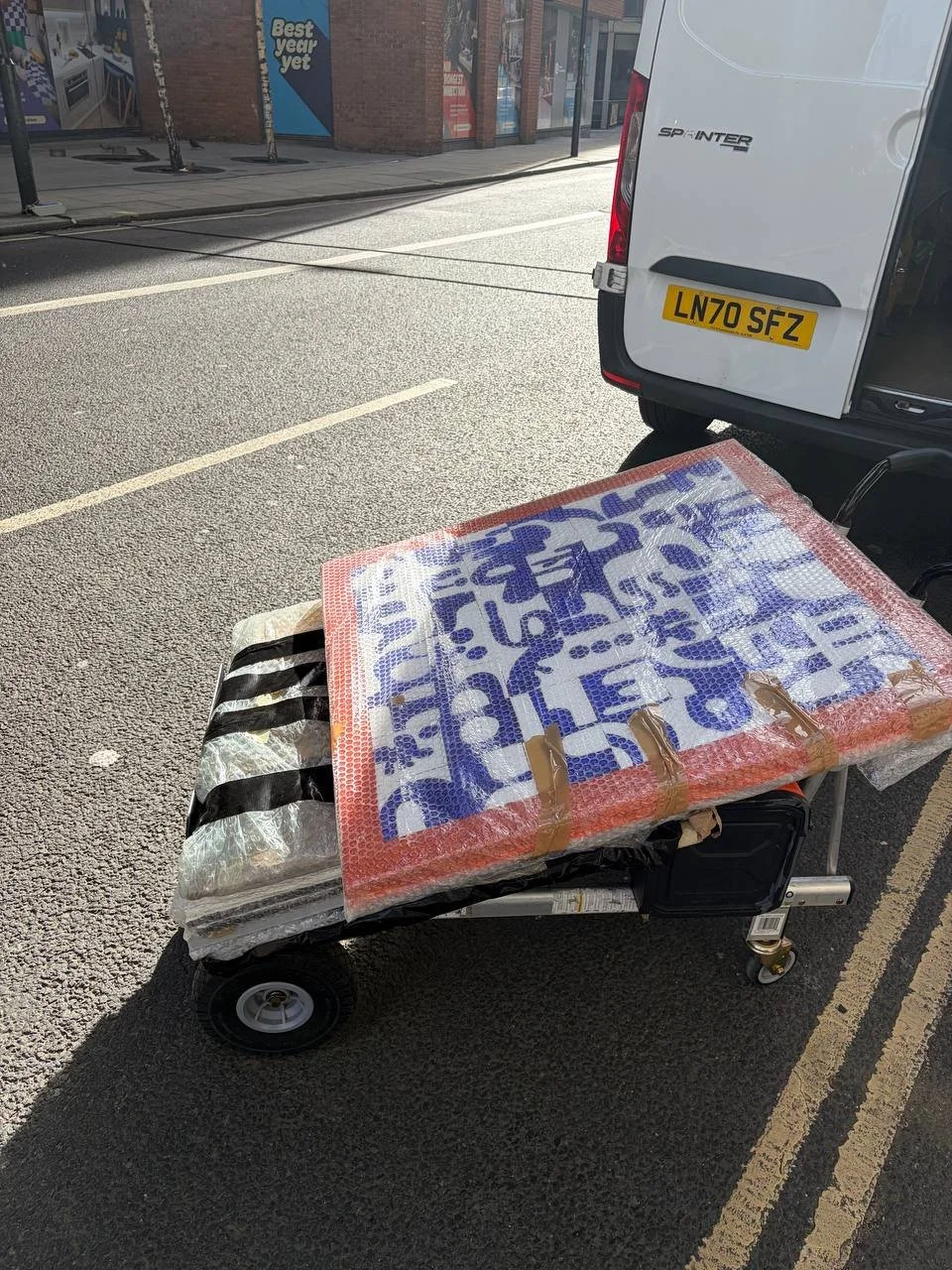
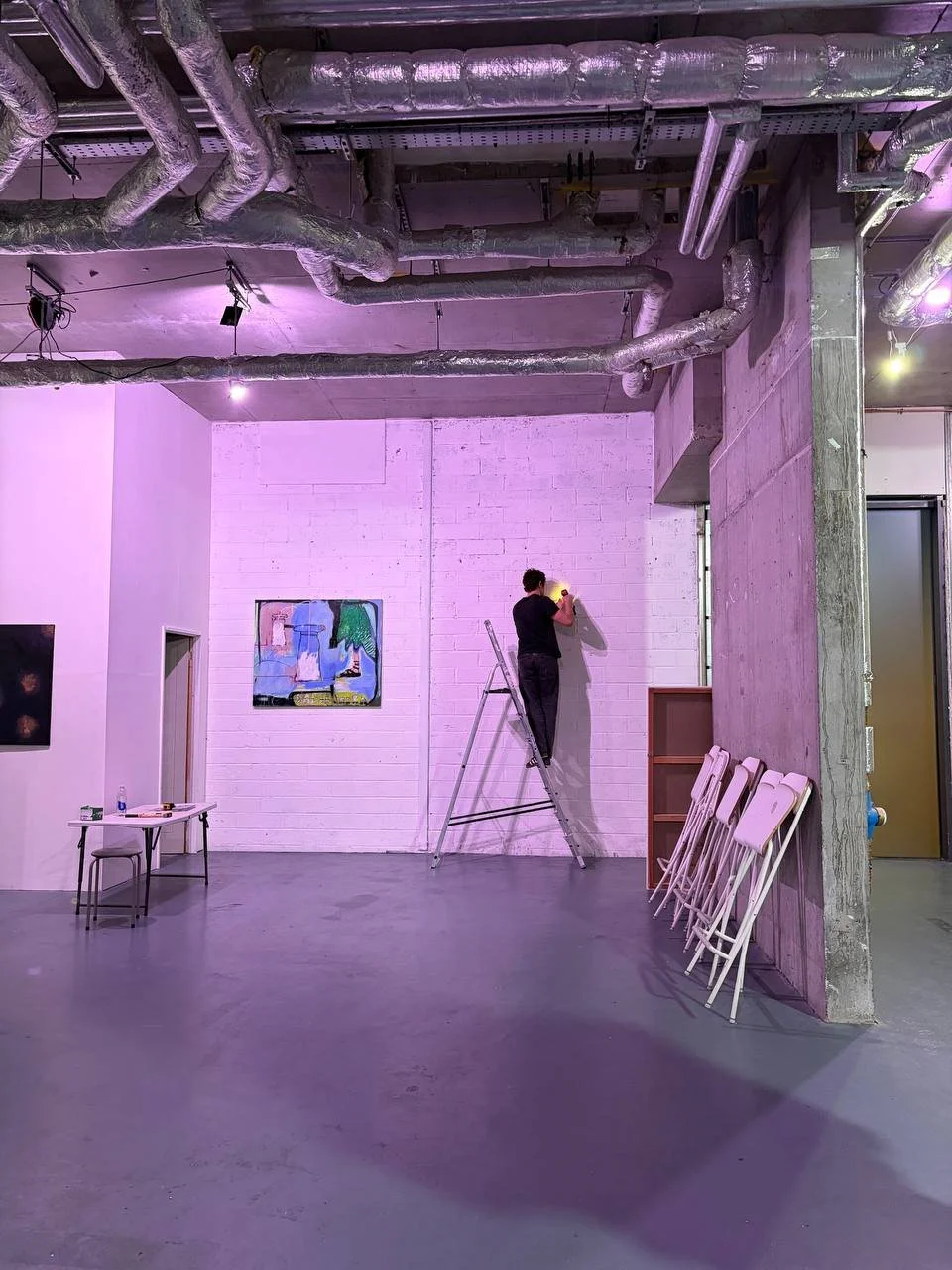
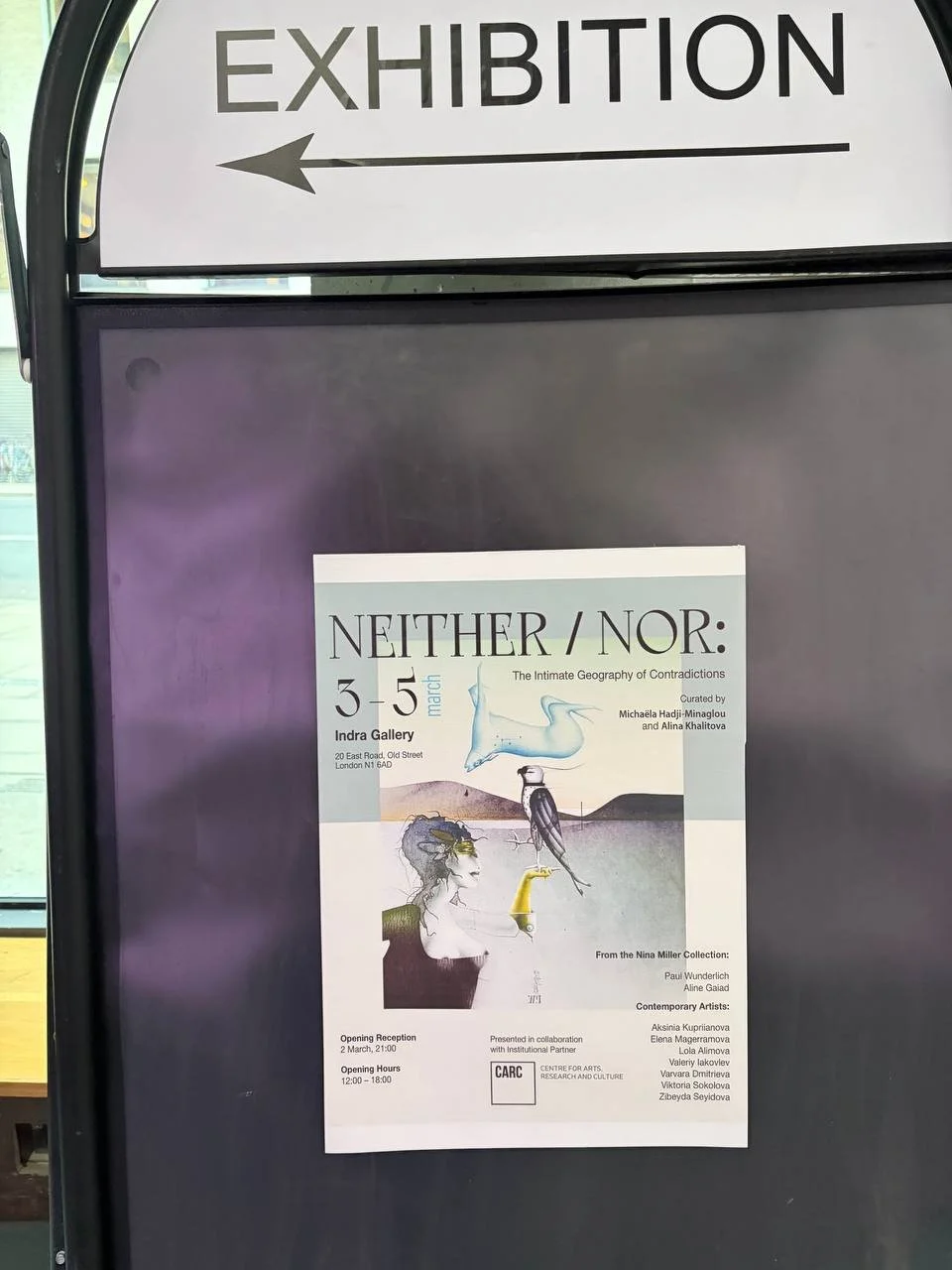
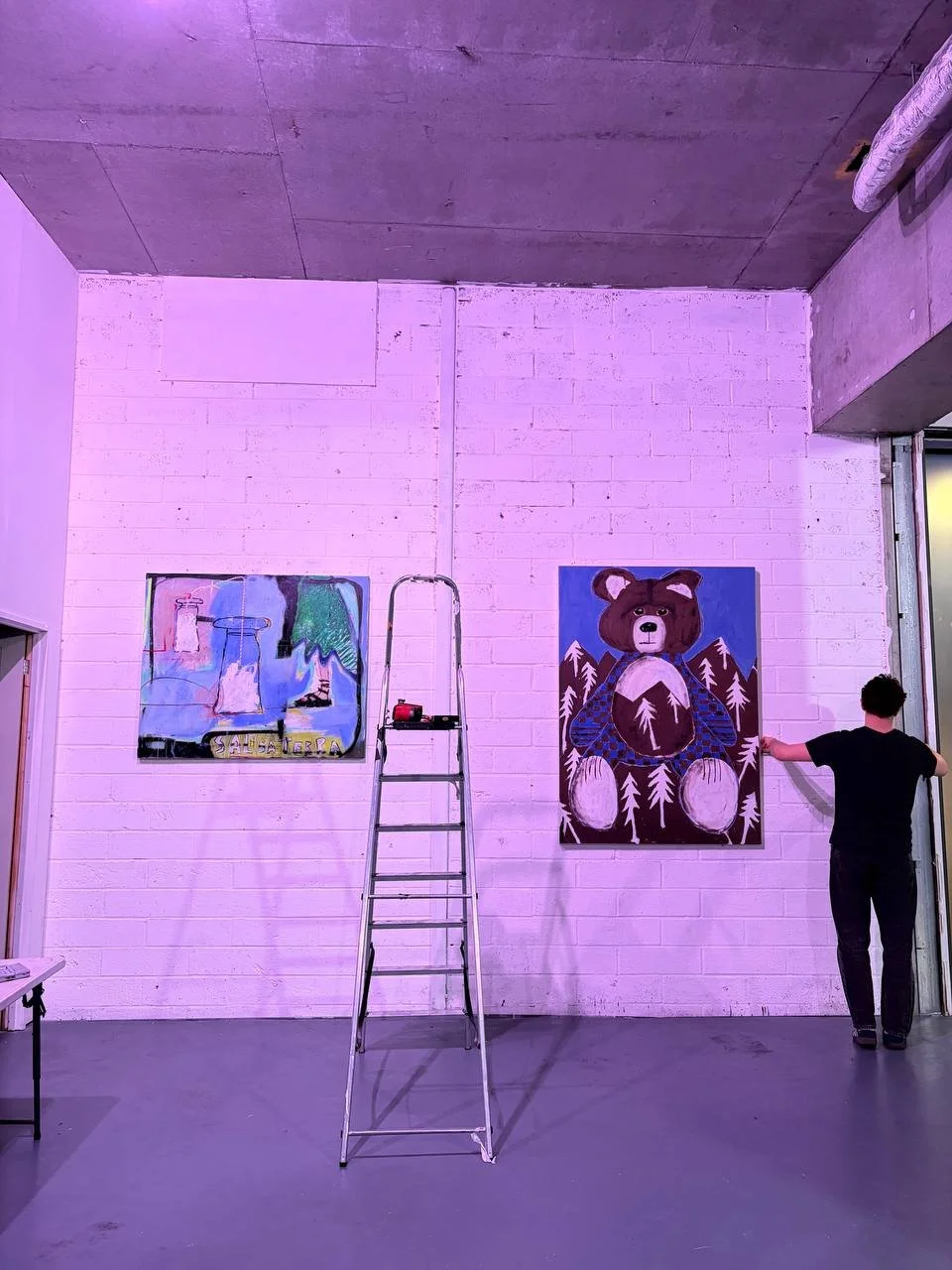
While working on the exhibition NEITHER / NOR: The Intimate Geography of Contradictions, I kept finding myself telling stories about what had happened in studios, in apartments with paintings leaning against the walls, in conversations that started with documentation and went somewhere else entirely. There is a version of curation that can be done from a desk, from an archive, from neatly organized image folders sent over email. I have worked that way. It is not the same thing. The question in the title of this essay is one I asked at almost every studio visit. It comes at the moment when you have already looked at everything the artist wanted to show you and you start to feel there is something else. Not hidden in any dramatic sense. Just set aside. Put behind something, or facing the wall, or stacked in a corner with its back to you. Artists are often the most conservative editors of their own work. What they consider unresolved or a digression from their main line is sometimes exactly what deserves the most careful looking. I like to take a small risk and in that way push the boundaries of my own curatorial vision and the artist's. Artists are mostly people who love play and risk, and that makes sense, otherwise they would be sitting on stable salaries as clerks. But when it comes to their art, they start to worry and hold on to the lines that worked, the ones the public received well. Or they simply do not consider some genuinely important byproducts of their practice to be art at all.
With Varvara Dmitrieva the question was exactly that. Her work circulates primarily as large-format analog photography, most often documentation of ritualistic performances in which she makes the masks and costumes herself, exploring questions of gender, geography, and the instability of identity. When I started looking more carefully at the documentation, I kept returning to the objects themselves, and asking her where all those masks actually were now and how they existed in the world. I very much wanted to make actual contact with something that has a physical reality that photography both reveals and mediates. I proposed showing the mask itself. Not its image. Mask (2023), approximately 120 centimeters in diameter, wood, sheep's wool, acrylic on board. Standing in front of it, you understand something about the scale of the performance, about the weight of the thing on the person wearing it. The decision to show the object rather than the photographic documentation was a curatorial one. Getting there required a conversation about what the work was actually doing.
Lola Alimova's practice is built around gesture and movement. She works with oil pastel, and what she has been investigating for years is what the body does when it makes a mark, the speed, the pressure, the resistance of the material against the surface. I knew this work before I visited her studio. But the work I eventually included in the exhibition, Against the Frame (2023), was not what I had expected to find. She made it after seeing Richter's large abstract canvases in person, not in reproduction, in person, and noticing something photographs had never shown her, a slight resistance at the edges where the hand had pressed against the frame beneath the canvas. Richter had not concealed it. For Alimova, who had spent years investigating the moment of contact between the hand and the material, this was not a minor observation. Here was a master who had left that moment legible in the surface of the work, deliberately. The stretcher frame beneath the canvas becomes visible through the oil pastel she applied, and the hidden architecture of the painting becomes its central subject. I saw this work in her studio and immediately understood it was a departure. Not from her concerns. From her usual way of resolving them. And I immediately felt that behind a work like this something could open up in the artist's development more broadly. My curatorial enthusiasm kicked in, the desire to show this before anyone else, to be the first to sense something new in an artist that might develop further and perhaps even become the central idea in her work. And I was not wrong. Lola is now working in exactly that direction.
And then there is the question of how to show a sculptor as a painter. Valeriy Iakovlev is a sculptor. That is not incidental information, it is the first thing he would tell you about himself. His paintings exist in his own professional hierarchy as preparation for sculpture, a way of thinking through form and light before they become three-dimensional. He told me how at some point, long ago in the studio of his main teacher at the academy, he began thinking through painting toward his future sculpture, got used to it, and never came to see these paintings as independent works. Asking him to participate in the exhibition with paintings meant, from his perspective, asking him to show his preparation sketches. He agreed with some hesitation. Untitled (Study for Sculpture) (2024) is exactly what its title says. And that is precisely why the work interested me. Painting carries a kind of incompleteness that resolved sculpture does not, a thinking-in-progress that stays visible in the surface. I found this piece stacked with other canvases. There were many of them, and I am sure I managed to push Valeriy's boundaries a little and helped him look at his own artistic practice in a new way.
Aksinia Kupriianova's graphic work is figurative. Pronounced, precise figuration, the level of control over the image that comes from years of working in dry technique. Her painting is something else entirely, abstract, the image dissolving before it fully forms. She talks about this herself, about how in painting she never strives for the degree of precision available to her in graphic work, about how some kind of “another artist" inhabits her the moment she picks up a brush. I had followed her work long enough to notice a quality in certain paintings that was unlike the rest, works where the image is present enough to create a genuine encounter, where something is surfacing rather than retreating. The tension between figuration and its own dissolution, which in her usual paintings tips fully into abstraction, stayed suspended in these. Stars (2025) and Two Faces (2026) were exactly those works. I always felt this as a kind of dissociation in her practice, a split between what she does in one medium and what she allows herself in another. Supporting this painting meant less making a curatorial selection and more pointing at something that was already there and asking for it to be seen. I am currently preparing an exhibition in New York called Figurative as Concept, and I will be showing a very unfamiliar Aksinia Kupriianova, one who makes the object world emerge even more distinctly in her painting.
None of these decisions were made from documentation. All of them were made in the presence of the work, or in conversations that only happen when there is enough trust to ask, so what have you got back there behind the cabinet? A curator who selects from images selects what the artist has already decided to show. That is one kind of job. The other begins when you ask a sculptor to show his paintings, when you recognize a gem in what the artist has set aside. These decisions require physical closeness to the material and genuine closeness to the person making it. They require time that will not appear in any exhibition credit.