
Medium Difference Through the Screen
by Sasha Burkhanova-Khabadze 3. 9. 2022
Curatorial essay
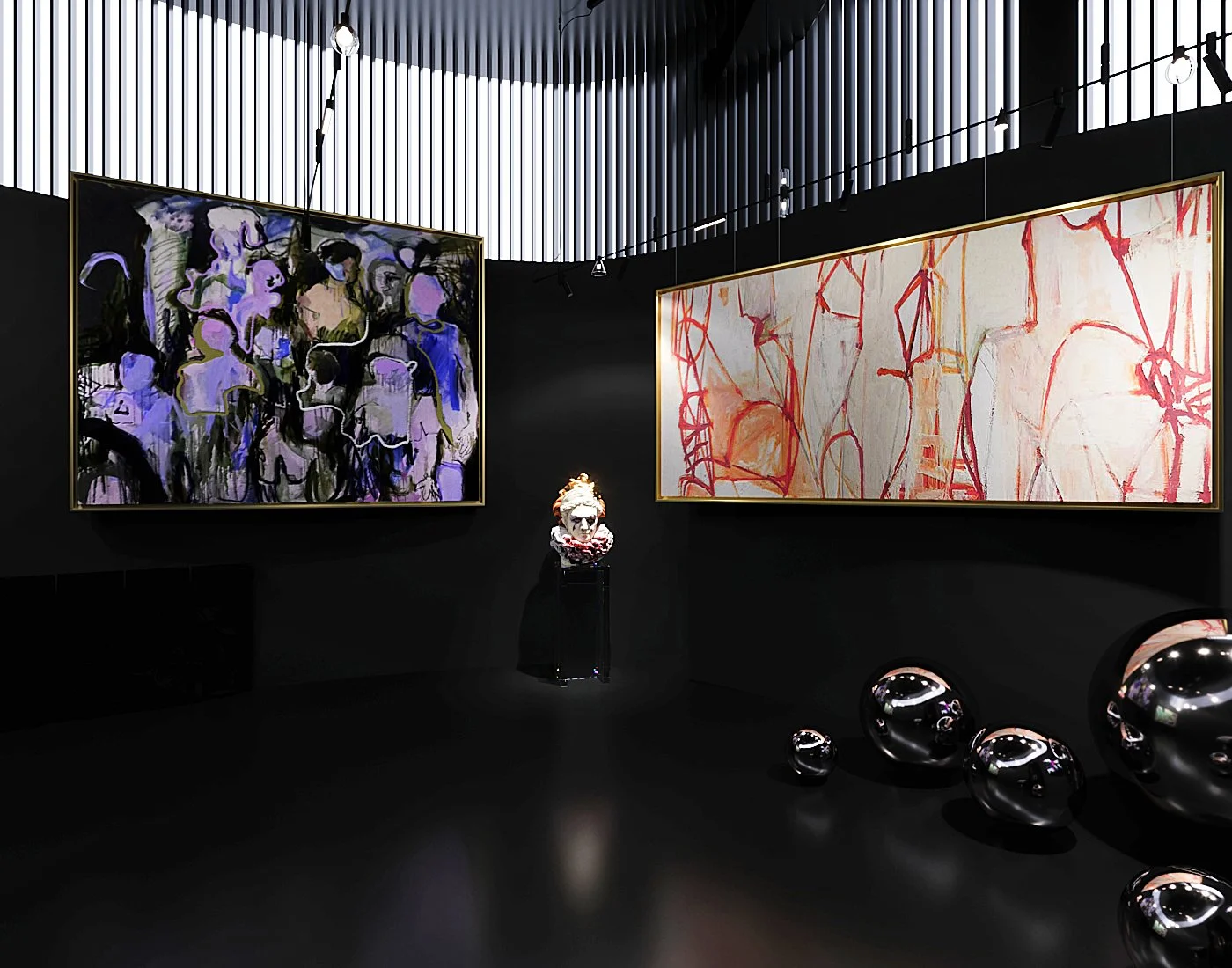
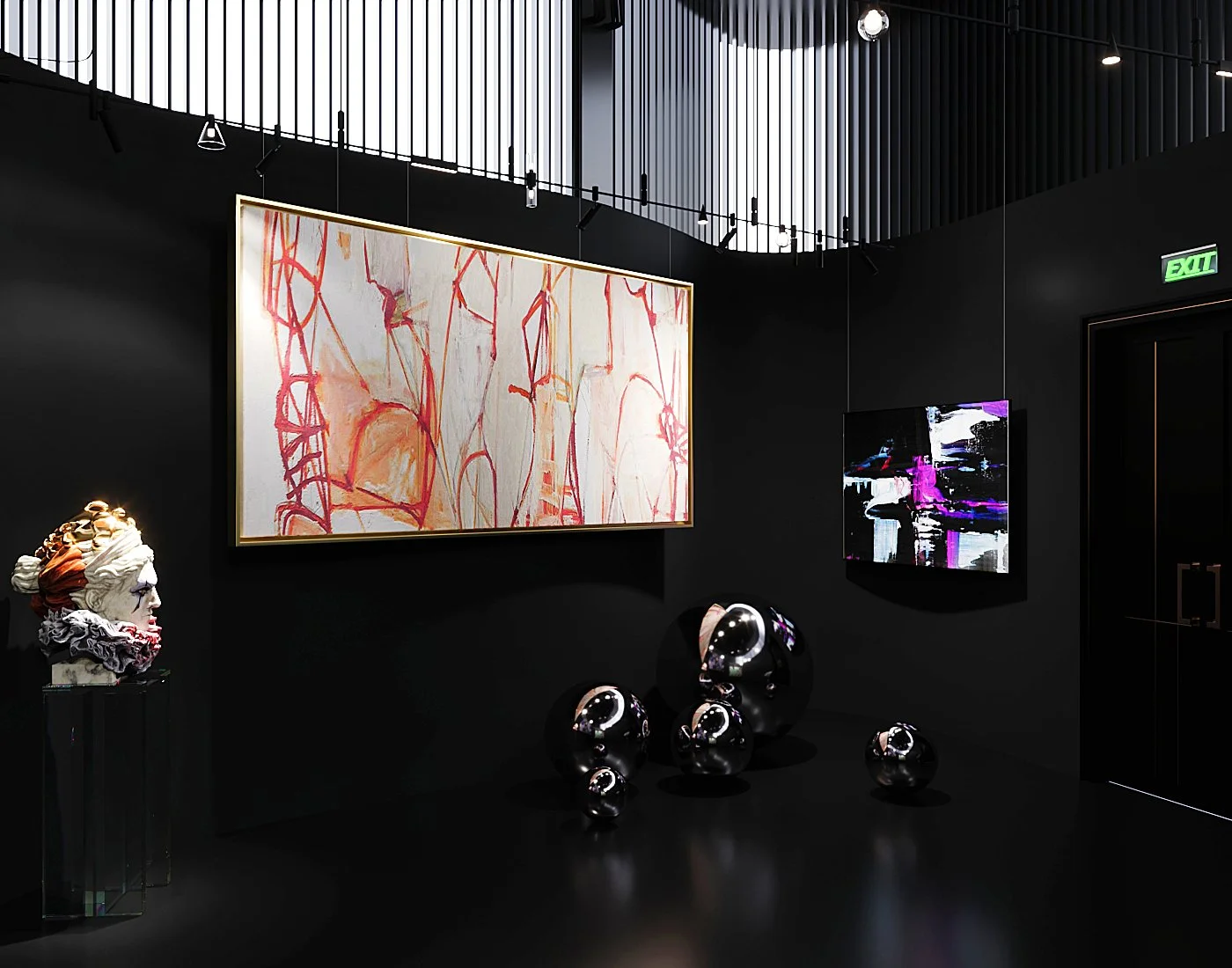
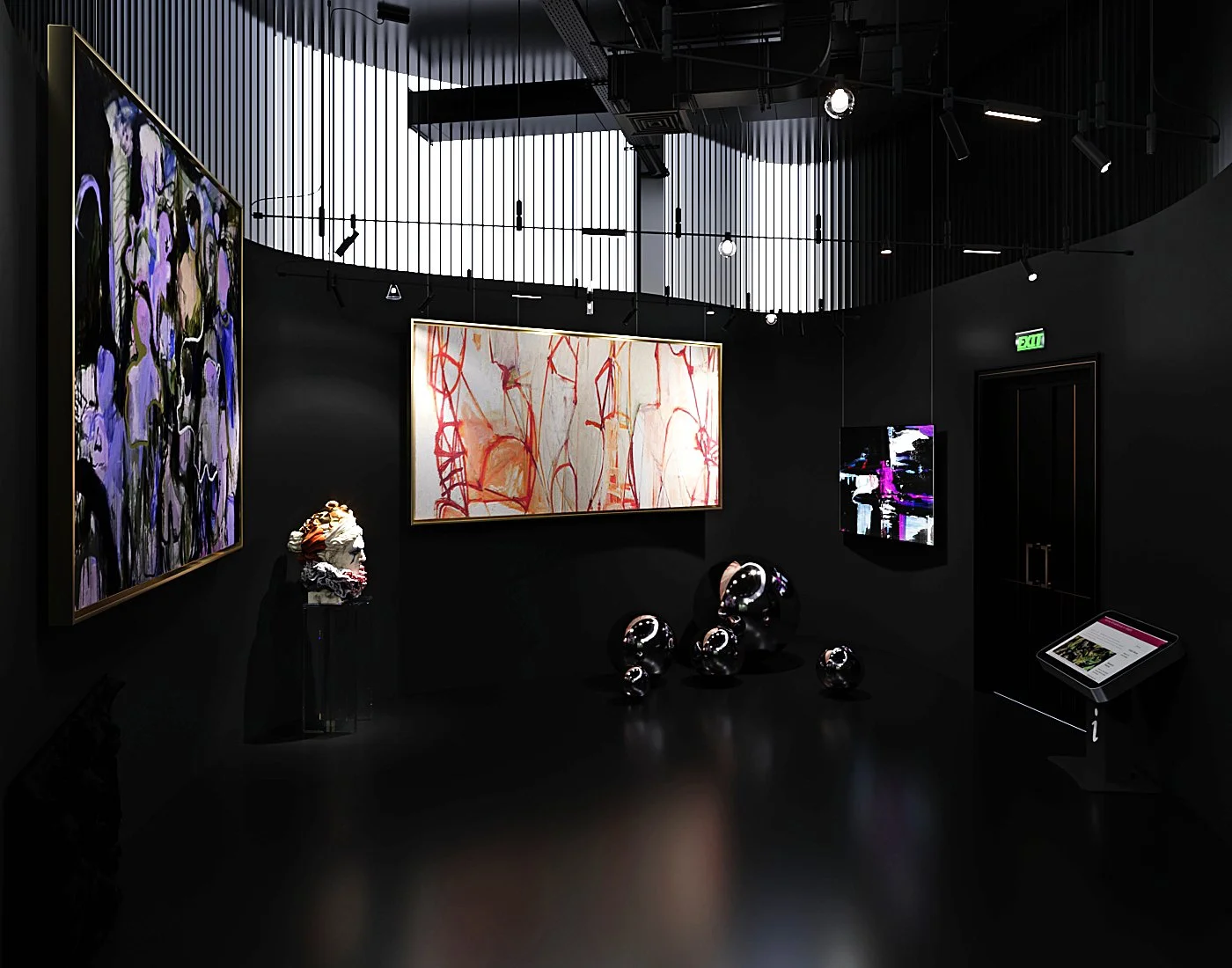
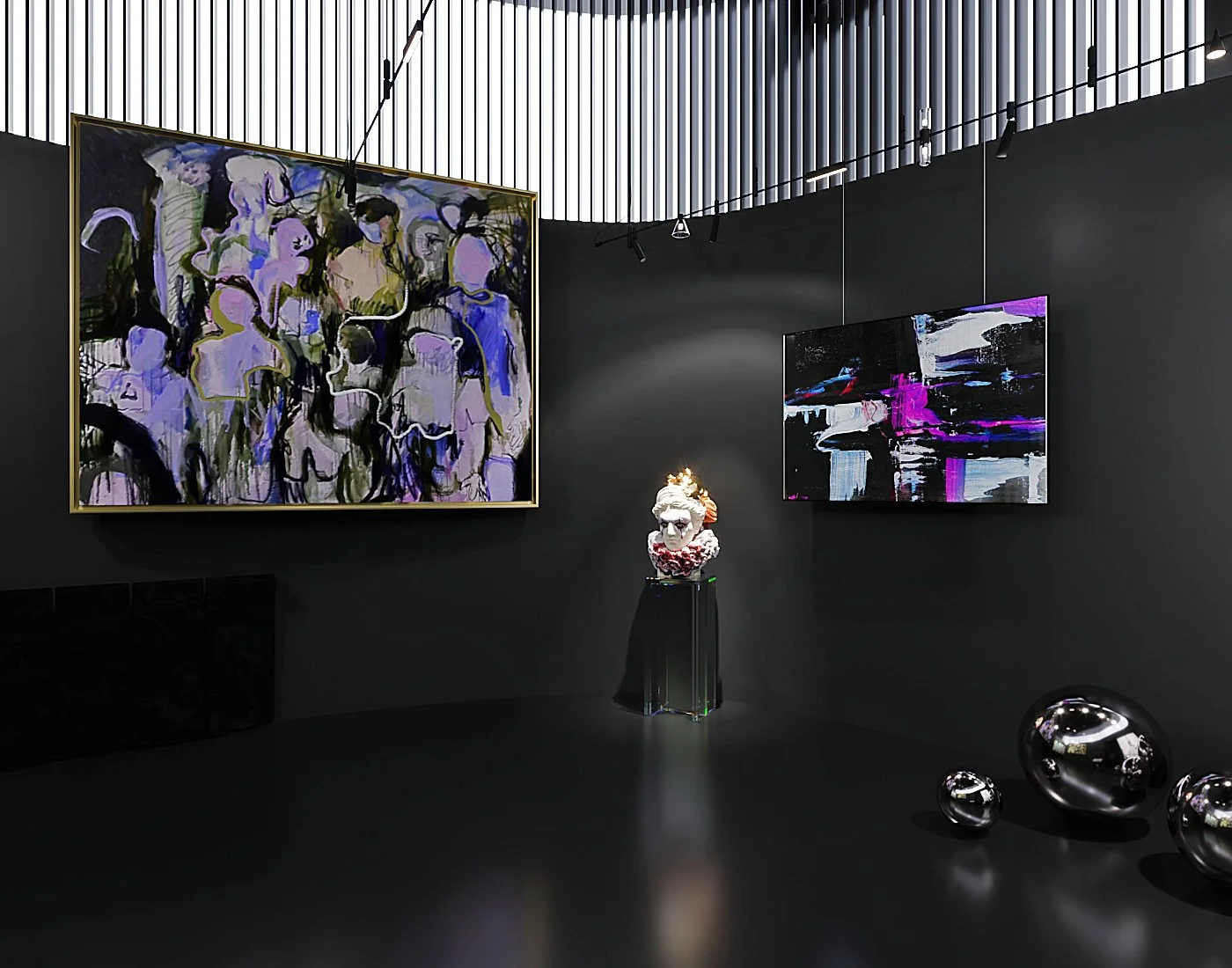
In this curatorial essay, I would like to speak about the exhibition that forever changed my view of how we should look at art.
The development of Between Mediums, the final exhibition of the 2021 research lab, was shaped from the outset by the conditions of the pandemic and by everything that followed. Although most legal COVID restrictions in England were lifted on 19 July 2021, that moment did not mean a simple return to normality. The cultural sector continued to exist in a state of instability, and the consequences of repeated closures still affected institutions.
It was in this atmosphere that I began to shape the project for the Centre for Arts, Research and Culture platform. In 2021, programmes were being rearranged very quickly, resources were limited, and exhibition-making itself remained tied to uncertainty. For this reason, the decision to present the project online was not simply a logistical step. It became a curatorial condition in its own right, requiring a reconsideration of how a work of art might be perceived when the viewer first encounters it through a screen.
This was especially important for the final exhibition devoted to the study of mediums, since the central difficulty lay not only in how to show works online, but also in how to preserve the difference between mediums within a digital format. Painting, photography, sculpture and installation produce meaning in different ways.
That is why the main curatorial question became how to make the difference between mediums visible in a form that itself constantly tends to erase that difference. The question was not how to imitate the gallery in a digital environment, but how to think through what is gained and what is lost when a work with its own medium-specific qualities passes through digital reproduction.
I tried as much as possible to show these differences, but almost all the versions we tested appeared rather flat in viewing. Sculpture was the first thing to be lost, and in the end we arrived at a display solution that was neither ideal nor even the most economical. Yes, we built a 3D gallery, and all the exhibits within it were also constructed in 3D form.
In this sense, Isabelle Moreau’s works proved the most successful, because one of them could be built in a 3D version. The team working on the online version collaborated closely with the artist. Together, they constructed a digital model of the sculpture. But even with such an attentive approach, however many photographs from different angles the artist sent, the very qualities that are perceived as volumetric in reality were still lost. On screen, the sculpture retained its outline, but it did not retain its presence.
Then another difficulty emerged. Kai Ueda’s works are constructed in such a way that they absorb the image into themselves and distort it, so that the viewer begins to feel as though the reality in which they are standing is itself distorted. In reality, these works need to be experienced bodily. You walk around them, and with each step the distortion changes, and with it your own perception of space changes as well. There is even a slight dizziness, because the work literally intervenes in your experience as a viewer. The 3D version could not convey this sensation. It reproduced the object, but it did not reproduce the actual dynamics of the encounter with it.
But, strangely enough, it was the two-dimensional works that were conveyed worst of all, although at first we thought they would present the fewest problems. Javier Estévez’s painting lost a great deal by being shown in flattened form. The reason is that within this painting there are delicate yet dense areas of surface that can only be seen at close range. With the participation of the artist himself, we tried to add volume to those places where a thickening of paint was intended, but the work literally began to shimmer before the eyes as the viewer moved around it in the online space. In addition, such solutions heavily overloaded both the exhibition integrated into the website and the site itself as a whole. As a result, we had to remove this painterly relief. At the same time, in the online exhibition it was impossible truly to come close to any of the works in order to examine them carefully, and that perhaps might have helped in the case of painting. But technically such programmes begin to distort the image too strongly at close range, so the standard settings are arranged in such a way that the viewer sees the work from approximately the same distance from which one would usually move across the floor of a gallery, without coming right up to it.
But the greatest loss, strangely enough, was suffered by the photographic works. Varvara Dmitrieva works with analogue photography, and on a very large scale. Today this is a rare type of image, and it is not technically possible to print it everywhere. Varvara printed her works at the well-known London-based PhotoFusion, whose equipment makes photographs of this scale possible. At the centre of her practice are the themes of ritual and identity. She makes the masks and costumes herself, then stages a performance, which she photographs using a large-format analogue camera. The exposure is very long in order to register every detail of the costume as fully as possible. But the impression one receives from these large-scale prints in reality is almost impossible to convey. They resemble black-and-white encyclopaedic photographs that seem to come slightly to life before you and appear at full height. Varvara does not choose this format by chance. If we are used to encountering ritual images on a small encyclopaedic scale, here the viewer is almost compelled to confront a new reality face to face, at its full height. It was impossible to achieve this effect simply by moving through the constructed online gallery.
It is important to add that all the works created in the process of building the online exhibition were jointly secured in copyright terms between the design team and the artist, since such digital versions are already considered separate works in relation to the originals. This situation also changed forever my view of how art should be exhibited on the internet. Since then, in my curatorial practice and on my own platforms, I have tried not to pursue the illusion of the closest possible approximation to reality, but rather to place the work in context and to show it contextually.
Almost a year has now passed since that exhibition, and we can see that the boom in online exhibitions has gradually faded. Most likely, many encountered the same difficulties that we did: the impossibility of conveying medium adequately online, and the need to navigate a legal field in which copyright questions relating to digital versions are constantly changing. Today, as Director of EXPOSED ARTS PROJECTS, I show online only those projects that were created digitally from the outset and for which the screen is an organic environment of existence. That seems to me the most honest mode of display, both in relation to the work itself and in relation to the viewer.