
Building a Dialogue Between the Old Masters and Emerging Artists
by Alina Khalitova 9. 4. 2026
Curatorial essay
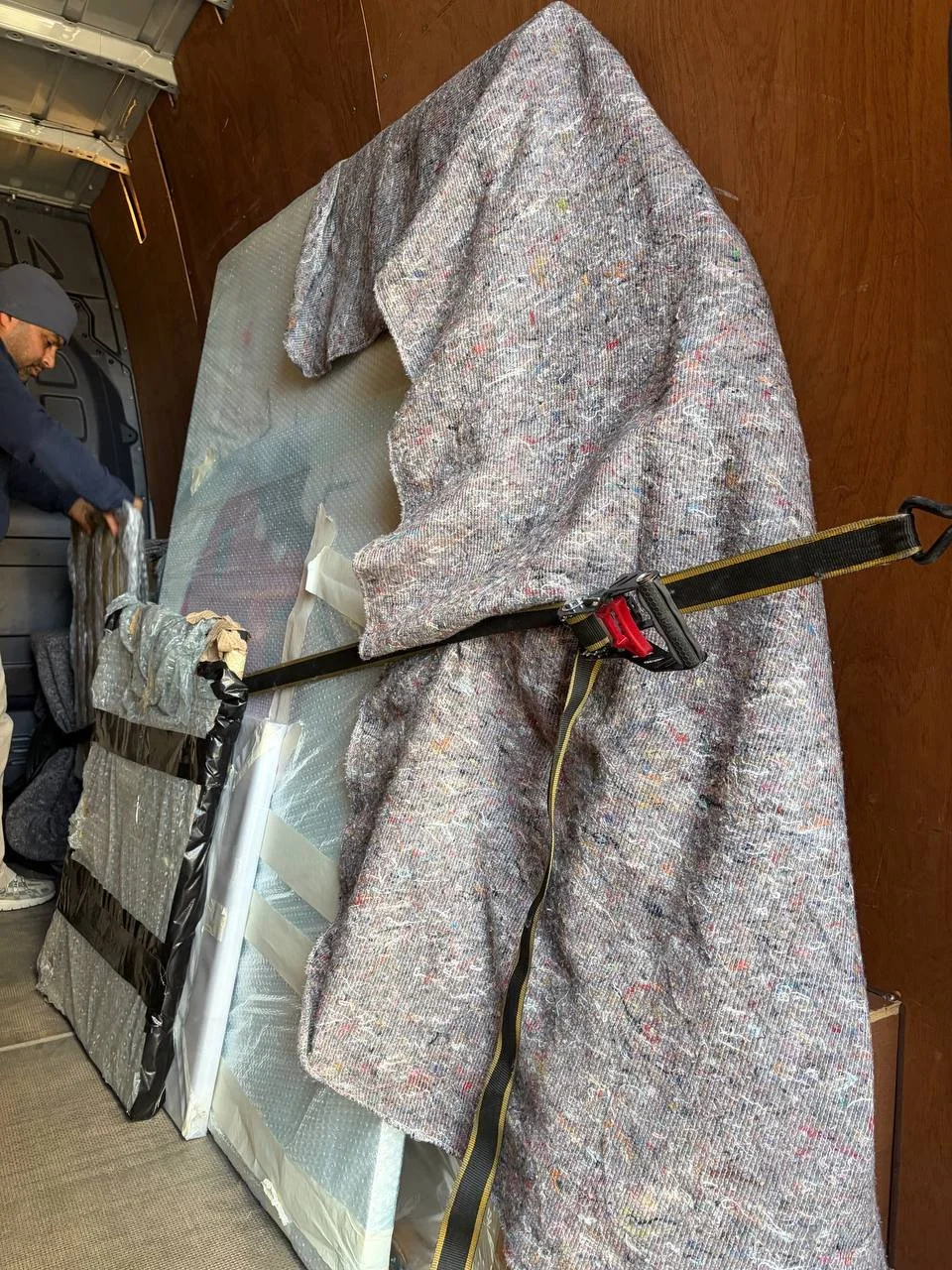
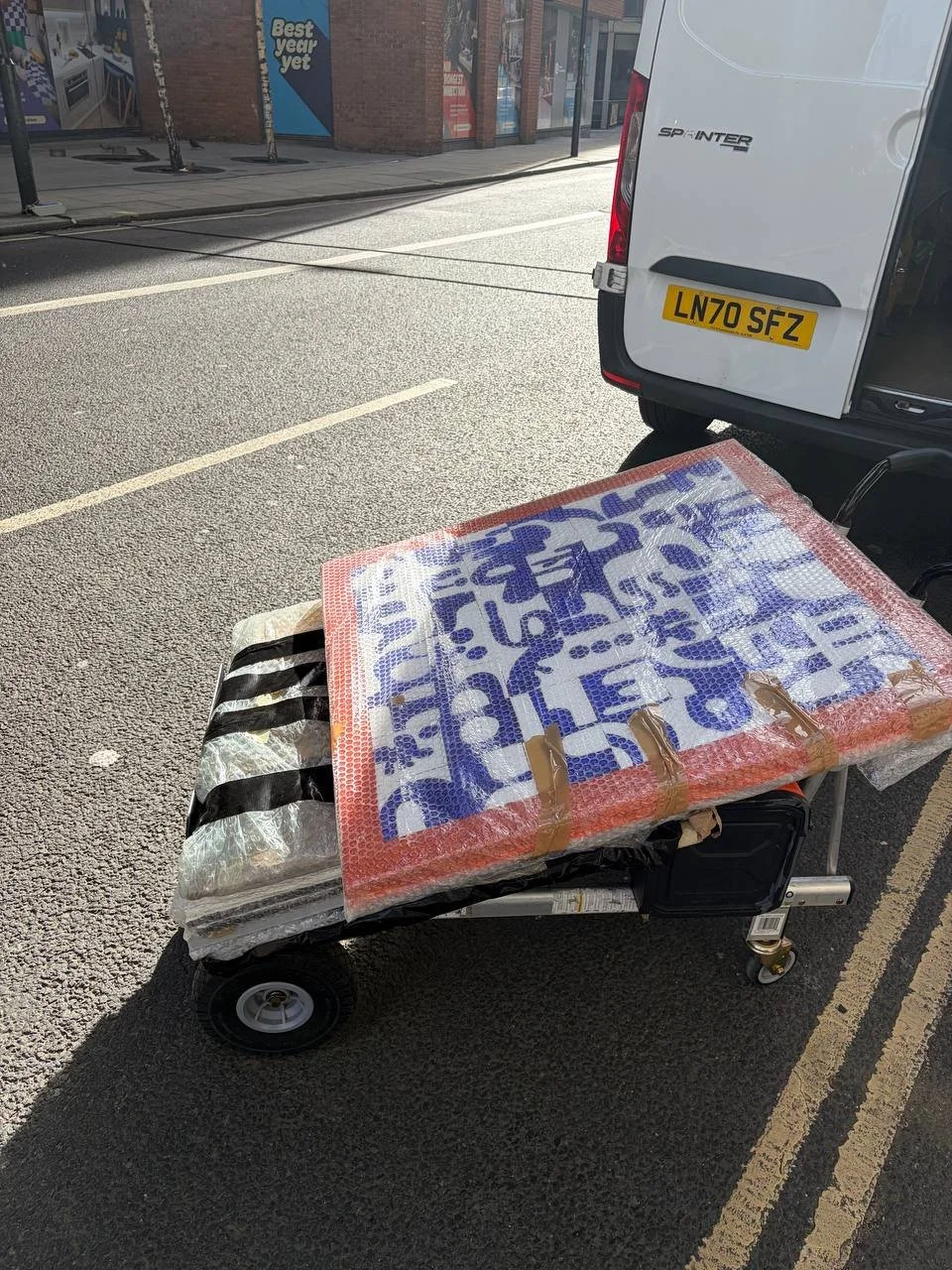
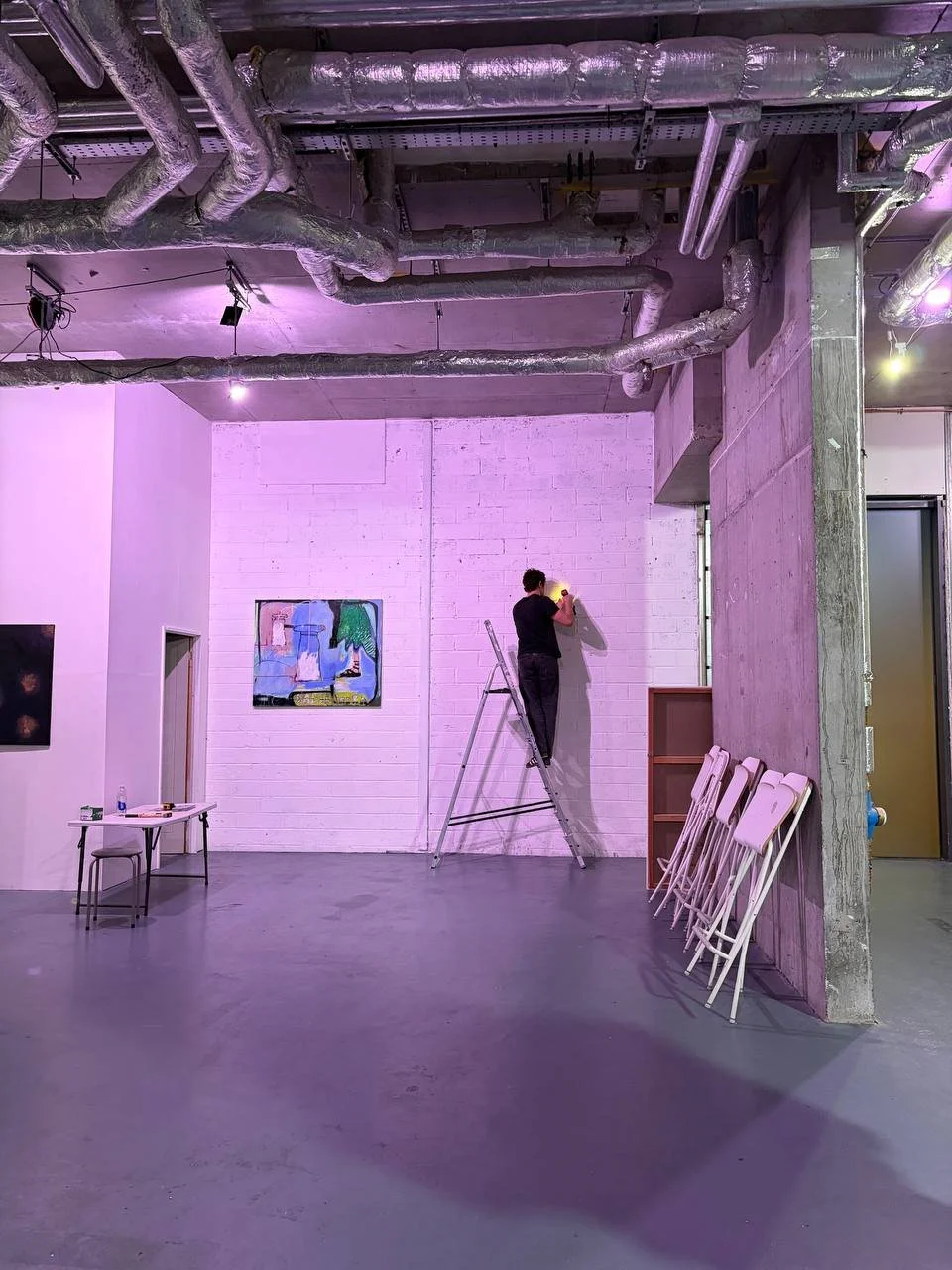
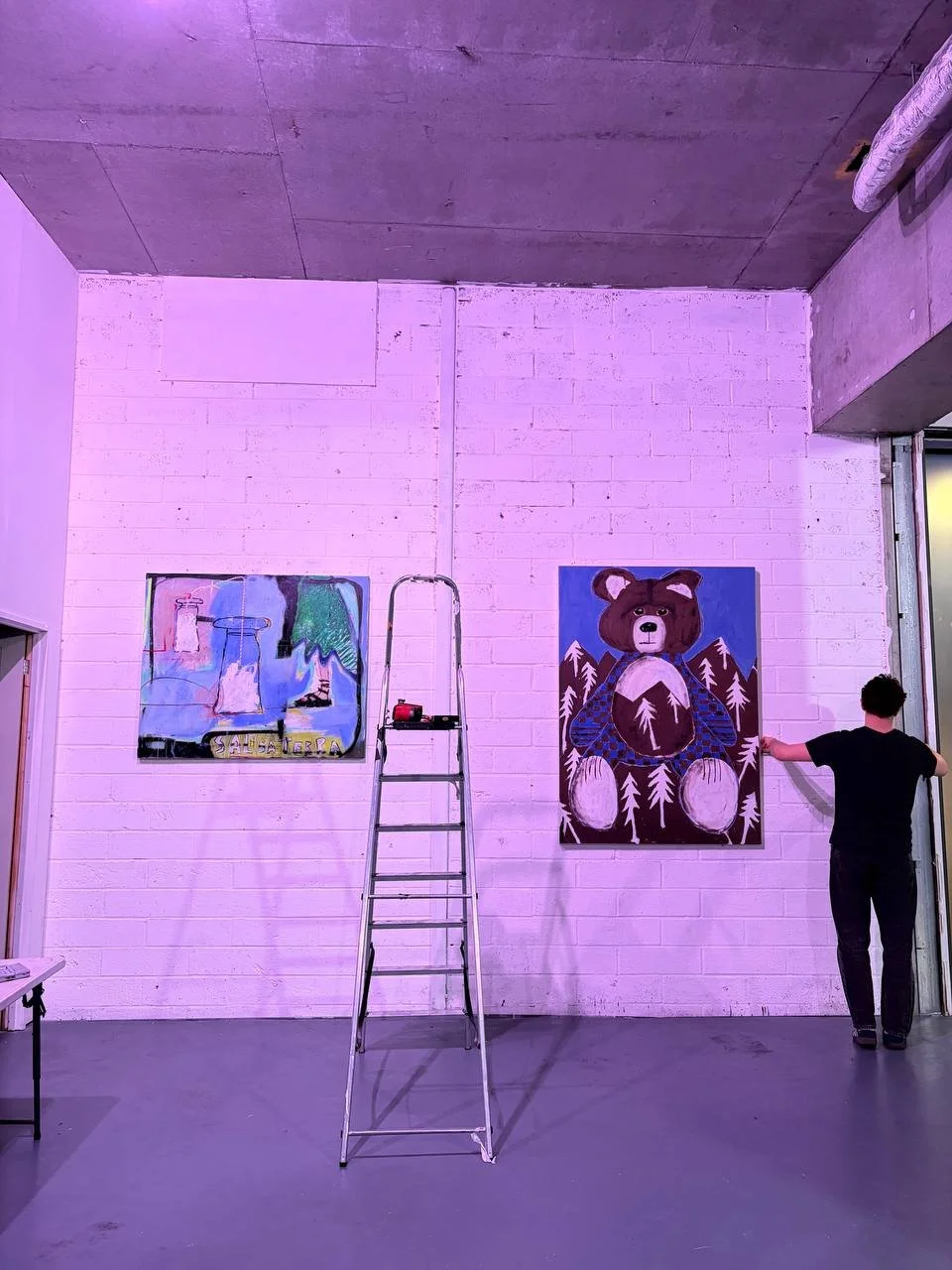
When I began selecting contemporary artists to exhibit alongside Paul Wunderlich, I kept returning to a question that had bothered me at other exhibitions: when does a dialogue between artists become an opposition? We are taught, almost from our first days as students, to speak of works being ‘in dialogue’, as though showing them together were enough. As a visitor, I had sometimes felt that the artists had been set against one another instead. Faced with a group of historical works of this calibre, I wanted to avoid that. My co-curator, Michaëla Hadji-Minaglou, helped me find a way.
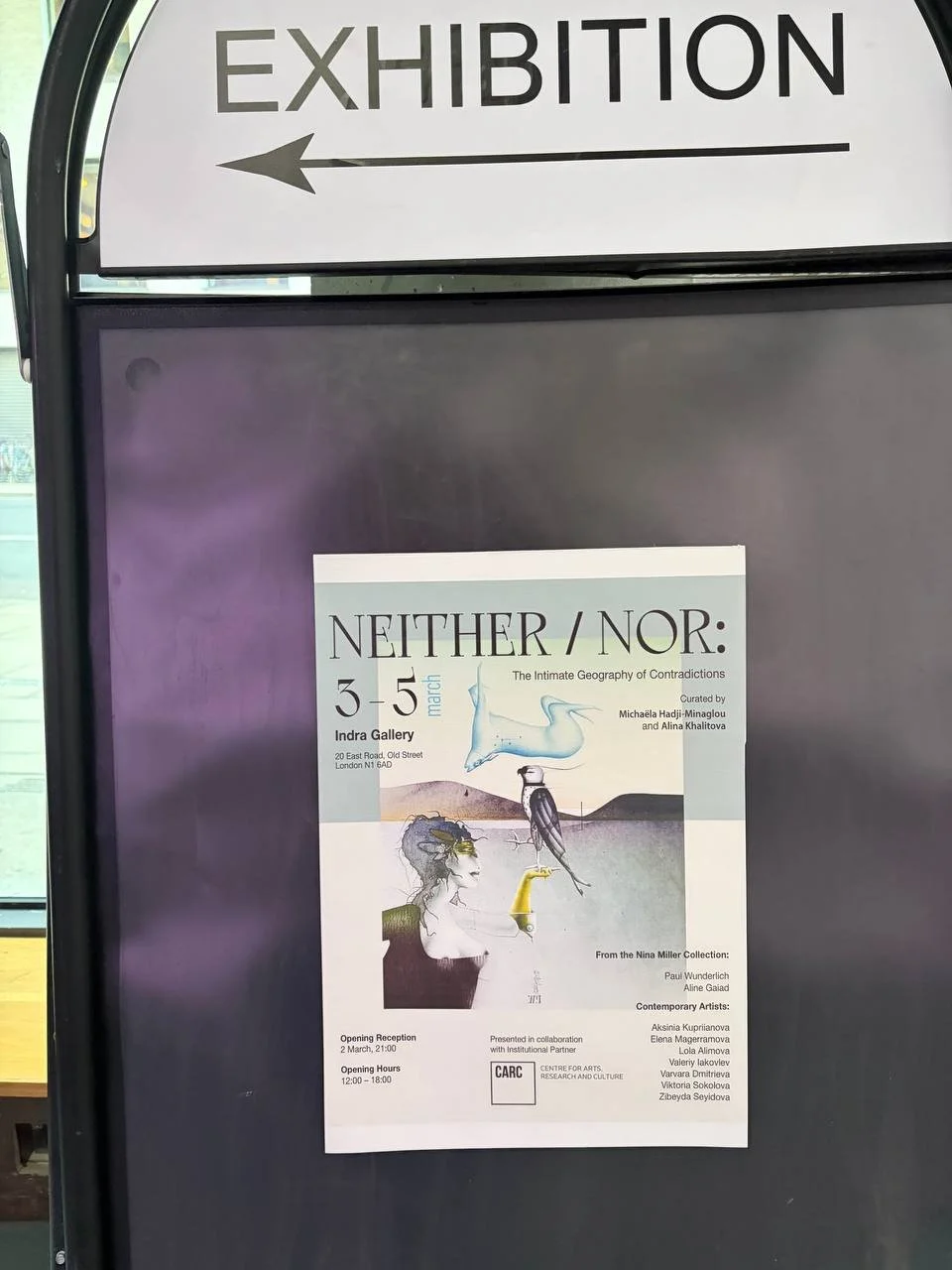
NEITHER / NOR: The Intimate Geography of Contradictions took place at Indra Gallery, London, from 2 to 5 March 2026. Organised by the Centre for Arts, Research and Culture (CARC) in collaboration with the Nina Miller Collection, the exhibition brought together lithographs by the German artist Paul Wunderlich (1927–2010) and paintings by Aline Gaiad, alongside work by seven contemporary artists: Aksinia Kupriianova, Elena Magerramova, Lola Alimova, Valeriy Iakovlev, Varvara Dmitrieva, Viktoria Sokolova and Zibeyda Seyidova.
The Nina Miller Collection is best known for its Picasso ceramics, of which it holds one of the largest private collections. It also includes paintings, works on paper, photography and even clothing. We had agreed on the group of lithographs with the collection’s chief curator at the outset. My task was to bring emerging artists into an exhibition with an established master.
I was drawn to the delicacy of Wunderlich’s work, its graphic and decorative qualities. I also felt a strong distance in time. His active years belonged to the second half of the twentieth century, and something of that period was immediately recognisable in the work, even without an art-historical education. I began with that feeling. His compositions were not crowded with figures. When I thought of contemporary multi-figure paintings, by contrast, I pictured something Baroque, then Rococo, then more extravagant still: scenes in which it was difficult to tell where one figure or episode ended and another began.
Wunderlich’s surrealism also seemed to keep something back. There was a riddle in it. Much contemporary surrealist work, to my eye, turns the subconscious inside out. Earlier artists have already made those journeys, and we inherit the routes and treat them as our own, just as we do with so much of what earlier thinkers and artists discovered. But I could hear where this line of thought was taking me. Turned into a curatorial argument, it would produce the very opposition I was trying to avoid.
I decided to follow a single strand of Wunderlich’s handling of form, tracing a distance from figurative prints to abstract painting. This left a great deal of air between the works, but the space felt flat. The two groups pulled against one another. I had a strong sense that I was heading in the wrong direction.
By then, the deadlines were close. I turned to Michaëla, whose experience of curating and exhibition-making was greater than mine. I was not expecting a miracle. Then she sent me her layout proposal. I felt as though she had taken something I could barely articulate and turned it into a Shakespearean sonnet. I had the words; I had been putting them in the wrong order. Her intervention reminded me of the fairy godmother in Cinderella, showing me in one gesture how it could be done.
Wunderlich’s lithographs remained the historical foundation of our plan. Working between Hamburg and Paris, he had developed a refined figurative language over several decades. His lithographs combined figuration with psychologically charged symbolism, moving between the photographic and the imagined. They evoked Albrecht Dürer and the enigmatic portraits of the School of Fontainebleau.
My part in the collaboration was to select the contemporary artists. I wanted to understand what each artist was doing and how the work needed to be shown, rather than choose pieces that would illustrate a thesis. Michaëla’s concept allowed contradictions to remain unresolved. Works with different approaches could occupy the same space without being forced into opposing camps. She drew on André Breton’s idea of a point in the mind at which life and death, the real and the imagined, cease to be perceived as contradictions. She placed this phrase on the gallery’s columns, repeating it throughout the space. The arrangement of the text across their surfaces reminded me of Futurist visual poetry, and its rhythm worked with the placement of the art on the walls. I was looking for artists for whom movement between such apparent opposites was already part of how they worked.
Viktoria Sokolova’s diptych, Cobalt Echo I and Cobalt Echo II (2026), was one of the key works in the contemporary selection. She uses grids and strict structures to bring order to a world that seems to be continually coming apart. In these paintings, the grid was open to rearrangement. She took apart squares painted in acrylic and reassembled them on the canvas in a new composition. Fragmentation and reconstruction were both the means of making the work and its subject.
With Valeriy Iakovlev, the question was whether a painting made in preparation for a sculpture could stand on its own. He is known primarily as a sculptor, and Untitled (Study for Sculpture) (2024) belongs to a group of paintings he does not usually regard as independent works. I was asking him to exhibit something he considered a preparatory stage. I rarely encounter contemporary sculptors who use painting in this way; pencil studies and newer technologies are more familiar. Iakovlev’s approach comes from rigorous academic training. He told me that painting helps him understand curves and light. At some point, he began to think in terms of sculpture through paint, and the habit stayed. He had never come to see the paintings as separate pieces.
I chose two oil paintings by Aksinia Kupriianova, Stars (2025) and Two Faces (2026). The medium matters here. Her graphic work is strongly figurative, whereas in her paintings images emerge and begin to dissolve before the eye can settle on them. She says that she does not pursue in paint the precision she can achieve in dry media. She seems almost to become another artist when she begins painting. Oil has its own viscosity, and she responds to it. This brings to mind Clement Greenberg’s Modernist Painting (1960), in which he argued that each medium should explore what was particular to it. With Kupriianova, though, the decision seems to come from the gut. She feels oil painting cannot serve the same purposes as ink drawing.
Varvara Dmitrieva’s work is usually encountered through her large-format analogue photographs of ritualistic performances. She makes the masks and costumes herself, using them to explore gender, geography and the instability of identity. For this exhibition, we chose to show the mask itself: Mask (2023), approximately 120 centimetres in diameter, made from wood, sheep’s wool and acrylic on board. I wanted visitors to encounter the object and its materials directly. The decision also brought concealment and revelation, which ran through the exhibition, into a very tangible form. A mask hides the wearer’s identity while presenting another.
During a studio visit, I was drawn to Lola Alimova’s Against the Frame (2023). The pressure of oil pastel on the canvas brings out the stretcher underneath. What normally disappears beneath the image becomes visible on its surface. I liked how directly the work drew attention to the physical painting, to the canvas and the frame that holds it. Questions of abstraction and figuration seemed secondary.
Alimova traced the experiment back to seeing Gerhard Richter’s work in person. In photographs, whether online or in catalogues, his large abstract canvases had looked perfectly smooth to her, almost as though he were painting on wooden panels. In front of the works, she noticed a slight hesitation in the hand's movement, the resistance of the stretcher beneath it. Richter had left that trace visible. Alimova already used oil pastel to study movement and gesture, and it was this small ‘delay’ that interested her. Given Richter’s reputation for leaving nothing to chance, its presence mattered. To my mind, an ‘imperfection’ left in the work so deliberately has as much of a place in art history as a brushstroke.
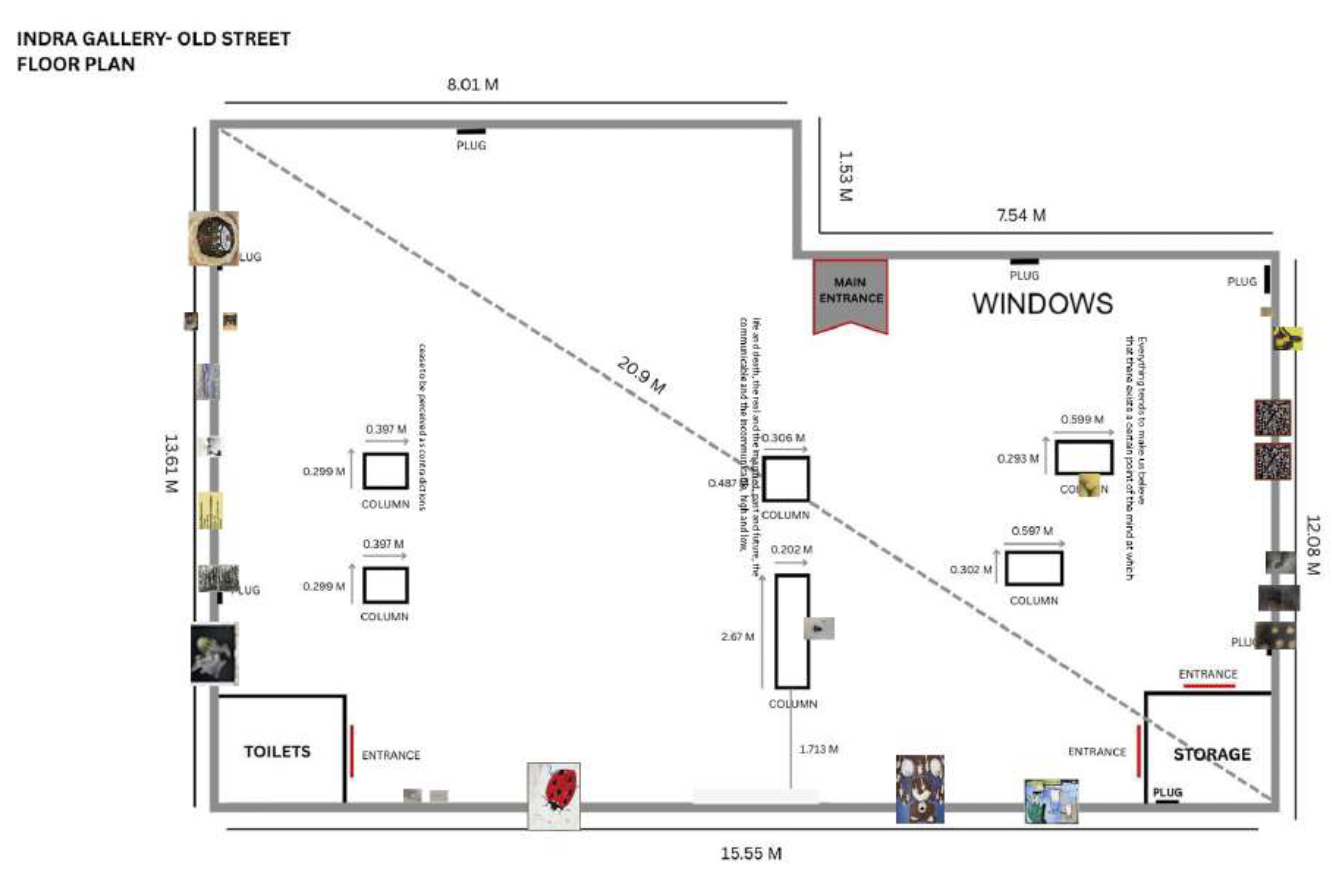
Exhibition scenography by Michaëla Hadji-Minaglou
Elena Magerramova usually paints on the reverse of thick sheets of plexiglass. Seen from the other side, the colours appear more vivid, while the transparent surface softens the brushstrokes without hiding them. Refraction is part of the effect. Magerramova is particularly interested in layering: paint thickens in one place and remains transparent in another, giving the work a sculptural quality. As the transparent layers accumulate, the image becomes difficult to fix. In the three works we showed, The Surface (2026), The Image (2026) and The Screen (2025), she used these changing degrees of transparency and opacity to explore how we perceive an image.
The smallest works in the exhibition were Zibeyda Seyidova’s Where Silence Dwells (2025) and Veil of Presence (2025), each thirty by forty centimetres. Seyidova chooses this scale deliberately. In one of our conversations before the exhibition, she told me that she wanted an intimate encounter. The painting should not dominate the viewer or the room. It should invite the viewer to take a few steps towards it, choosing to enter the work’s territory. A slight change of angle beside one of these paintings reveals earlier layers and brush movements. A photograph misses that change. Something almost holographic about it, though the effect comes entirely from paint.
What surprised me once the exhibition opened was how strongly Wunderlich’s lithographs came to feel like points of origin. We had planned around them as historical reference points. In Michaëla’s layout, they were spread throughout the gallery, so that visitors kept moving between them and the contemporary work. There was no separate historical section to visit and leave behind, no simple progression from ‘before’ to ‘after’. An encounter with a contemporary work could alter the next encounter with Wunderlich, or vice versa. The arrangement let those connections shift as one moved through the room.
I came away from the exhibition wanting to look more closely at the languages of form that artists develop for themselves. Influence and homage had proved less useful here than attention to how each artist worked. We had found a way to place the contemporary artists alongside Wunderlich as equals. I want to keep working that way.
Alina Khalitova is a curator, art writer and artist working between London and New York. She is a member of the PARAZIT art collective and received the CERINNO Prize from the Nina Miller Collection in 2021. NEITHER / NOR: The Intimate Geography of Contradictions was presented at Indra Gallery, London, from 2 to 5 March 2026, organised by CARC.