
ARAEEN'S QUESTION, ANSWERED BY CAMBRIDGE
By Lisa Knoll
21/09/2026
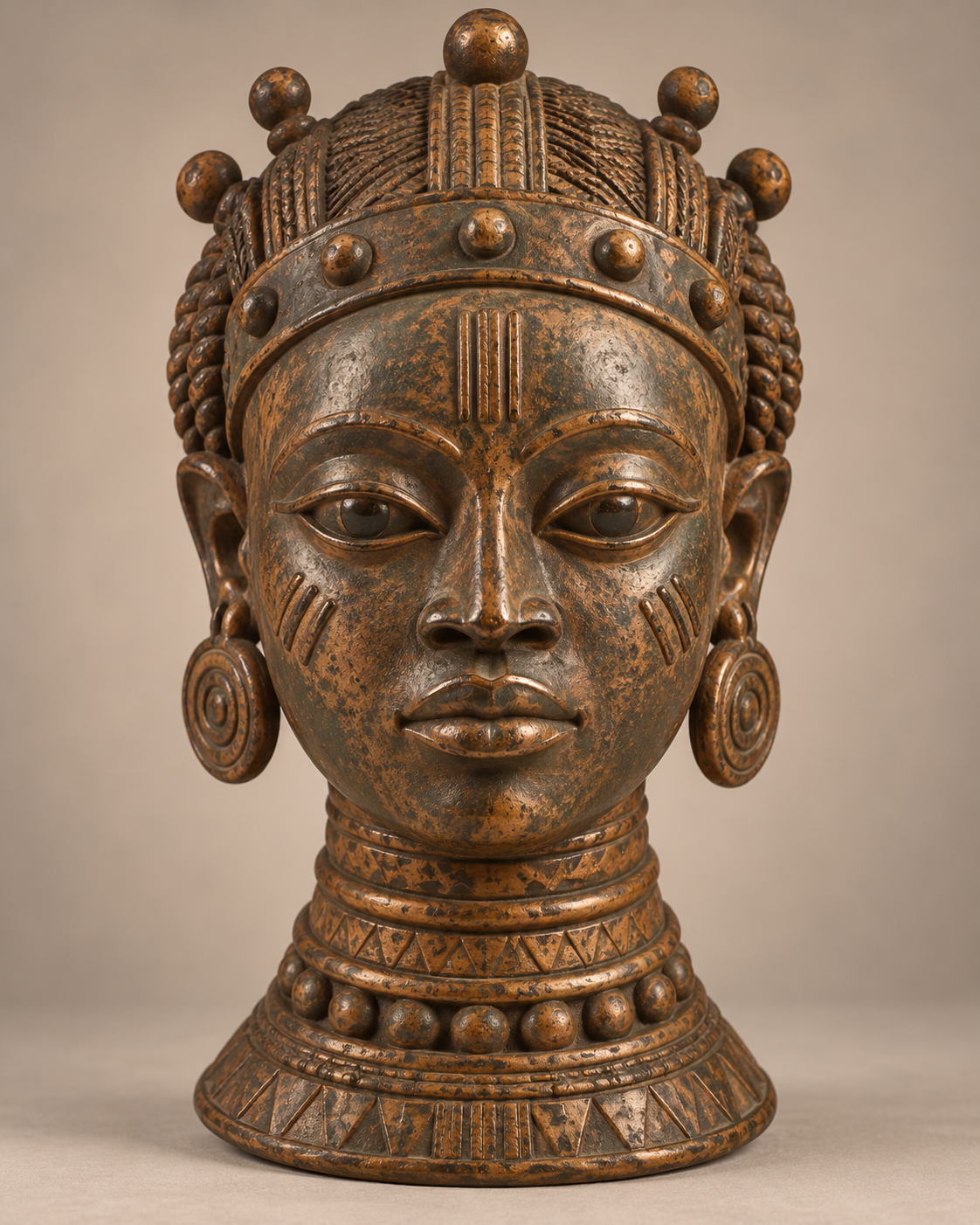
Rasheed Araeen’s postcolonial critique of British art institutions, read against Cambridge’s Benin bronzes return
In The Other Story, the 1989 exhibition he curated at the Hayward Gallery, the artist and critic Rasheed Araeen made an argument that British institutions spent the following three decades only partially absorbing: that the post-war contribution of Asian, African and Caribbean artists to British modernism had not simply been overlooked by accident, but actively written out of a national art history constructed to present modernism as a fundamentally white European achievement [1]. Araeen’s broader critical writing pushed this further, arguing that British cultural institutions could not adequately address this erasure while remaining silent about the colonial relationships – extraction, looting, forced removal – that had shaped the very collections those institutions held [2].
Cambridge University’s decision, formalised earlier this year, to transfer legal ownership of 116 Benin artefacts held by its Museum of Archaeology and Anthropology to Nigeria’s National Commission for Museums and Monuments offers a rare instance of a British institution addressing the second half of Araeen’s argument directly, rather than settling for the more comfortable first half. It is one thing for a museum to diversify its contemporary exhibition programme; it is a materially different act to relinquish ownership of objects taken during, in the University’s own account, “the sacking of Benin City” by British armed forces in February 1897.
The distinction matters because it is precisely the one Araeen’s criticism turned on. Representation within existing collections – showing more art by non-white artists, hiring more diverse curatorial staff, writing more inclusive wall text – does not, on Araeen’s account, resolve the underlying question of how those collections came to exist in the first place. A museum can become considerably more representative in its programming while the foundational violence of its acquisition history remains entirely undisturbed. Restitution, by contrast, directly unsettles the material basis of the collection itself, which is why it has consistently proven far more contested within British institutions than programming reform.
It is worth noting the limits of even this more substantial step. Cambridge’s Museum of Archaeology and Anthropology holds approximately 470 objects connected to Benin City in total; only 116, identified specifically with the violent events of 1897, are covered by this transfer, with several objects remaining in Cambridge on extended loan for teaching purposes. The far larger holdings at the British Museum – by some distance the most significant Benin collection anywhere in the world – remain, as of this year, unaffected by any comparable transfer, constrained by the British Museum Act’s continuing restrictions on deaccessioning.
Read through Araeen’s framework, this partial pattern is itself instructive. It suggests that meaningful institutional reckoning with colonial acquisition is currently proceeding piecemeal, university by university, museum by museum, rather than through any coordinated national policy – precisely the kind of fragmented, institution-by-institution progress that leaves Araeen’s original 1989 argument about systemic, structural erasure only partially answered, thirty-seven years after The Other Story first asked British institutions to reckon with it directly. Cambridge’s transfer is a genuine and substantial step. Whether it represents the beginning of a coordinated shift, or a single institution’s decision to move ahead of a national consensus that has not yet arrived, remains, for now, an open question.
[1] Araeen, R., ed. (1989). The Other Story: Afro-Asian Artists in Post-War Britain. London: Hayward Gallery / South Bank Centre.
[2] Araeen, R. (2000). “A New Beginning: Beyond Postcolonial Cultural Theory and Identity Politics.” Third Text, 14(50), pp. 3–20.