
ACCORDING TO POLLOCK
By Lisa Knoll
19/09/2026
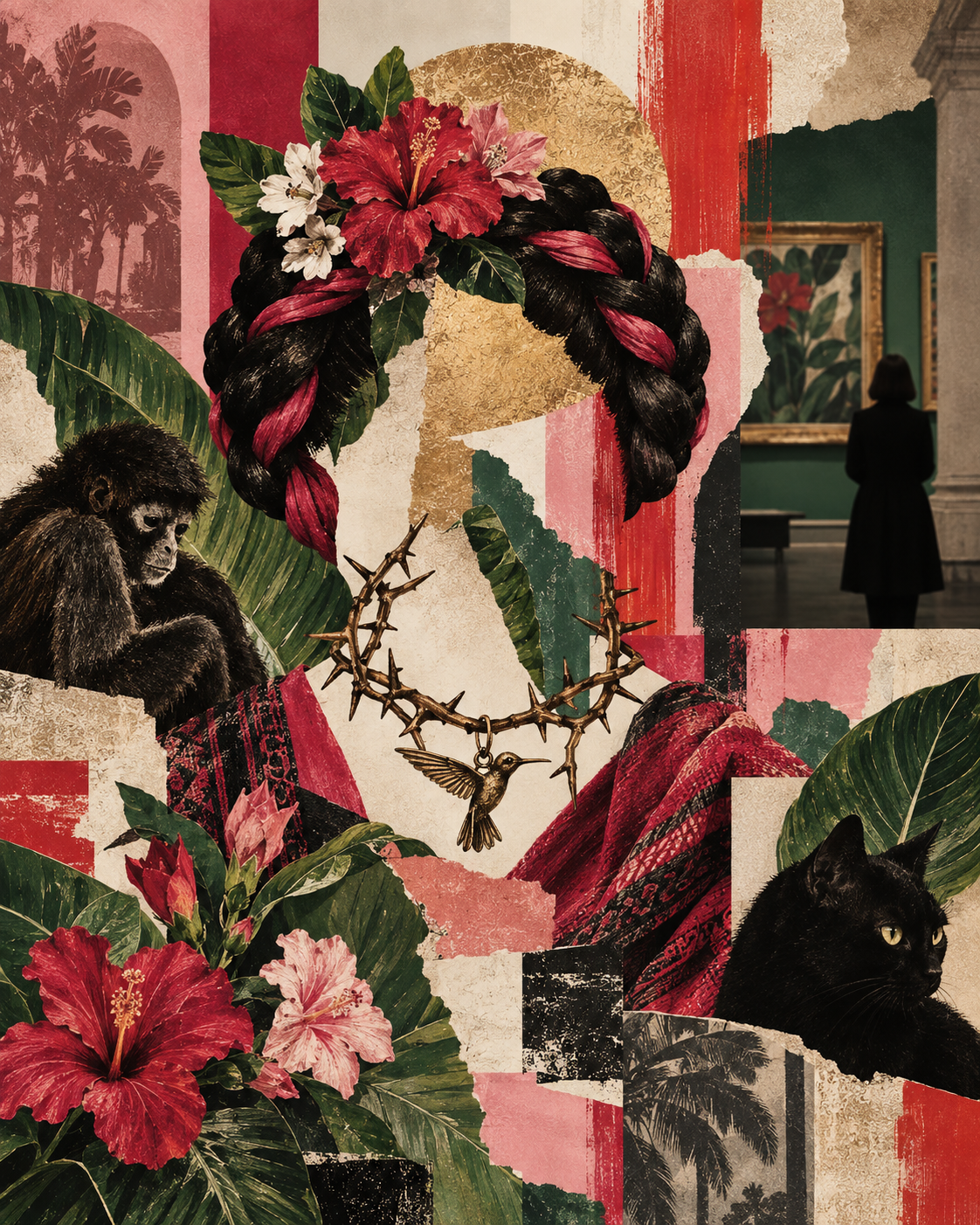
Griselda Pollock’s critique of the “great woman artist” myth, tested against Tate Modern’s Frida Kahlo
In Old Mistresses: Women, Art and Ideology (1981), Griselda Pollock and Rozsika Parker made an argument that has since become foundational to feminist art history: that the historical exclusion of women from the canon was not primarily a matter of talent overlooked, but of an entire critical apparatus — biography, genius, connoisseurship — built in ways that made women’s contributions structurally difficult to see as art-historically significant in the first place [1]. Pollock’s later work extended this into a specific warning about what happens once a woman artist is finally admitted into the canon: she risks being absorbed not as an artist whose work demands analysis, but as a myth, a life story that substitutes for critical engagement with the work itself [2].
Frida: The Making of an Icon at Tate Modern places this warning under unusually direct pressure, because the exhibition’s own premise — tracing how Kahlo became a “global icon” rather than simply presenting her paintings — makes the myth-making process itself the explicit subject of the show, rather than an implicit trap the curators risk falling into. Organised with the Museum of Fine Arts, Houston, the exhibition brings together more than thirty of Kahlo’s works alongside photographs, personal artefacts and pieces by later artists she influenced, framing Kahlo through what the museum’s own material describes as her multiple “selves”: wife, intellectual, political activist, artist.
This framing is, in one sense, exactly what Pollock’s critique would predict and caution against: biography, personality and cultural symbolism placed on equal footing with, or arguably ahead of, formal and technical analysis of the paintings themselves. A viewer could reasonably worry that an exhibition organised around “iconicity” risks becoming precisely the kind of myth-consuming encounter Pollock warned against — engagement with Kahlo the phenomenon rather than close attention to Kahlo the painter’s specific formal choices, her particular deployment of Mexican folk-art traditions, or her technical handling of self-portraiture as a sustained, evolving problem across three decades.
Yet the exhibition’s decision to build its case explicitly around Kahlo’s cultural reception, rather than presenting that reception as an unfortunate distortion to be corrected, arguably does something closer to what Pollock’s own later scholarship increasingly attempted: treating the mechanisms of myth-making around women artists as a legitimate object of art-historical study in their own right, rather than pretending those mechanisms do not exist and hoping formal analysis alone can dissolve them. Whether Frida: The Making of an Icon successfully threads that needle — using Kahlo’s iconic status as material for critical analysis rather than simply amplifying it further — is a question the exhibition invites rather than resolves for its visitors.
What is not in doubt is the exhibition’s scale of ambition: at over 130 works when Kahlo’s paintings and contextual material are counted together, it is the most substantial UK presentation of her work in more than two decades. For anyone interested in testing Pollock’s argument first-hand, there is no better current opportunity in Britain to ask, painting by painting, where genuine critical attention ends and myth-consumption begins.
[1] Parker, R. and Pollock, G. (1981). Old Mistresses: Women, Art and Ideology. London: Routledge & Kegan Paul.
[2] Pollock, G. (1999). Differencing the Canon: Feminist Desire and the Writing of Art’s Histories. London: Routledge.