
Public Art Celebrates the Global Spirit of Football in New York and New Jersey
by Darriel Patrick
24/6/2026
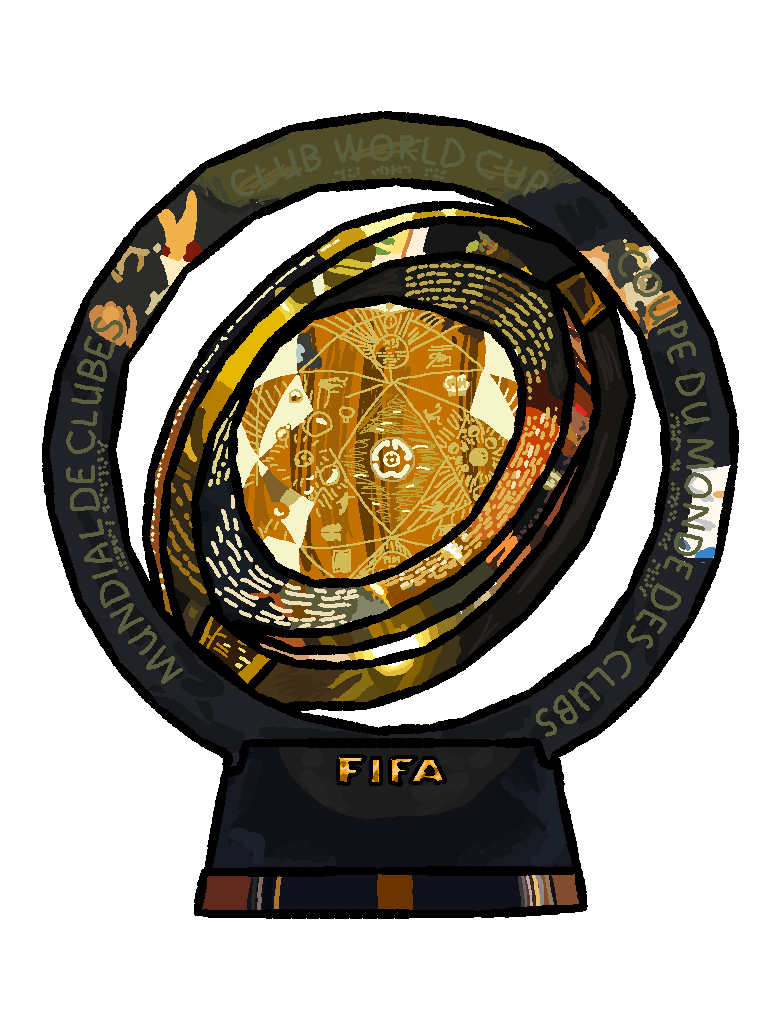
Club World Cup trophy. Illustration by Polskipoker, CC0 / public domain, via Wikimedia Commons.

Every time a mega-event lands in a city, the art follows close behind, and it is usually the part worth being suspicious of. Sponsor-friendly, crowd-pleasing, gone the week after the closing ceremony. So I came to The Art of the Game ready to be unimpressed. What changed my mind is small but real: the thing actually lives in the street, and it does not pretend the football is anything other than what it is, a shared object that almost everyone on earth has kicked, chased, or argued about.
The premise is simple. Twenty-three artists, one form, the football, treated as a surface to work on. The results are scattered across the five boroughs and into New Jersey, timed to the 2026 World Cup. No ticket, no gallery, no line. You turn a corner and there one is.
Where Sport and Culture Intersect
Big tournaments always leave a mark past the stadium, on architecture, on design, on how a city uses its public space for a few weeks. Most of that mark is branding. The better instinct behind this project is to treat art as part of the event rather than as decoration bolted onto it, and on its strongest days it manages that.
Putting the work outside is the whole point, and it is the right call. A football sculpture in a museum atrium is a curiosity. The same object on a sidewalk in Queens or outside a train station in Newark is something a kid stops at, a commuter photographs, a stranger explains to another stranger. That is a different kind of looking, and public art is one of the few forms that can produce it.
A Diverse Group of Artistic Voices
The roster spans generations, disciplines, and backgrounds, mixing names you would know from the international circuit with artists whose work digs into identity, community, history, and city life. That range matters here more than it would in a themed group show, because the subject invites a thousand readings and the project wisely refuses to pick one.
There is no house style imposed on the football. Each artist takes the same form somewhere different, and the spread of interpretations ends up looking a lot like the region itself, which is the most honest thing the project does. The ball turns into a container, for a personal story, for a formal experiment, for an argument about who the game belongs to. When it works, it is because the artist trusted the object to hold weight rather than just painting it bright and calling it festive.
Art in the Public Realm
Accessibility is the part I will defend without hesitation. Skip the museum, skip the gallery, put the work where people already are. Public art can reset a familiar street, make someone slow down on a route they walk every day and actually see it. During a World Cup, when the city is already keyed up and full of visitors, that effect compounds. The sculptures become markers in a celebration that is happening anyway, and they give it somewhere to point besides a screen.
This is also where the project is most exposed. Public art set loose in a city of this size will be uneven by definition. Some pieces will be landmarks. Some will read as nice props near a fan zone. That unevenness is the cost of doing it in the open instead of behind a curated wall, and I think it is a cost worth paying.
A Global Event Through a Local Lens
The World Cup is global, but nobody experiences it globally. You experience it on your block, in your bar, in your neighbor's flag hung out a window. The Art of the Game gets this. It takes the largest sporting event on the planet and routes it through specific neighborhoods and specific artists rooted in this particular metropolitan sprawl.
That is the move that saves it from being generic. An event this size can either flatten a place into a backdrop or use it as material. This one mostly chooses material, pulling institutions, artists, and audiences into the same project for reasons that go a little beyond the tournament dates. Whether any of it outlasts the summer is the open question, and the honest answer is that most of it will not. The point is what it does while it is here.
Beyond the Final Whistle
Sport and art get compared constantly, usually in a way that flatters neither. But the comparison holds on one count, which is that both can put a crowd of strangers into the same feeling at the same moment, and both travel across borders without a passport. The Art of the Game leans on exactly that overlap.
Through these installations the football stops being only a game and becomes something to make with and argue about. That is a modest claim, and I prefer it to the grander ones these projects usually reach for. Creativity does not need to redeem a mega-event or leave a permanent legacy to be worth doing. Sometimes it just needs to be good, free, and standing on the right corner when someone walks by. On that count, this one earns its place.